You think you are merely taking a stroll, but you are actually mapping a graph.
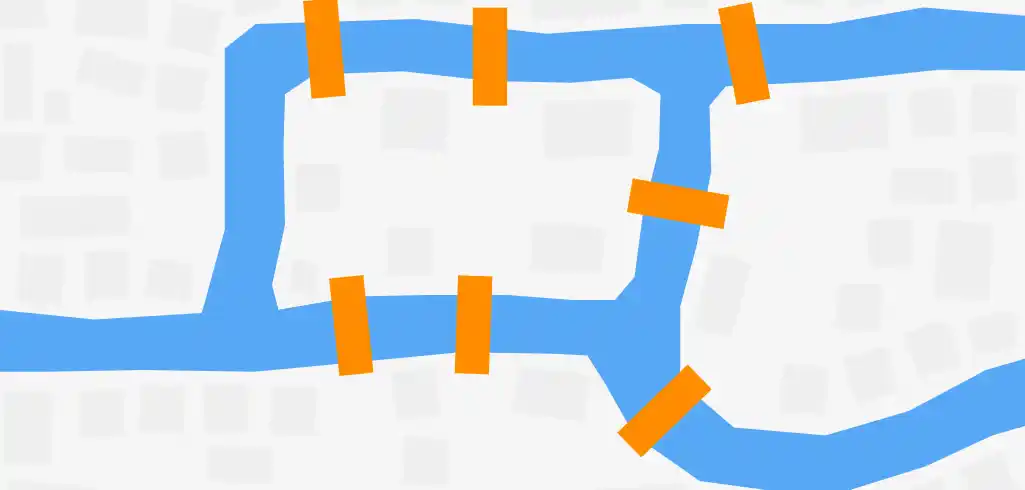
Is it possible to devise a route that crosses every single bridge exactly once, without backtracking or repeating a path?
Try this interactive puzzle . Three centuries ago, this seemingly simple riddle laid the foundation for a major branch of modern mathematics: Graph Theory.
Seven bridges in a Prussian town
In the 18th century, the Prussian city of Königsberg (now Kaliningrad, Russia) was divided into four landmasses by a bifurcating river. These landmasses were interconnected by seven bridges. The locals grew curious: could someone set out from any point in the city, traverse all seven bridges, and cross each one exactly once?
Countless citizens spent hours attempting the feat. Some were convinced a solution existed, while others grew skeptical that it was even possible.
The mystery remained unsolved until the mathematician Leonhard Euler turned his attention to it.
Euler was not peering into a map to measure. The width of the river did not matter. The length of the bridges did not matter. Even the winding labyrinth of the city streets was irrelevant. All that truly mattered was:
- Which pieces of land were connected to one another
- Which bridges were forging those connections
In a move quintessential to the mathematical mind, Euler stripped the city down to its bare essence: a handful of points and lines. He let the points represent the landmasses and the lines represent the bridges, instantly transforming a sprawling, real-world map into a pristine, abstract diagram. The dilemma was no longer about taking a stroll through town, but rather:
Can this network of lines be drawn in a single, continuous stroke, without tracing over any line twice?
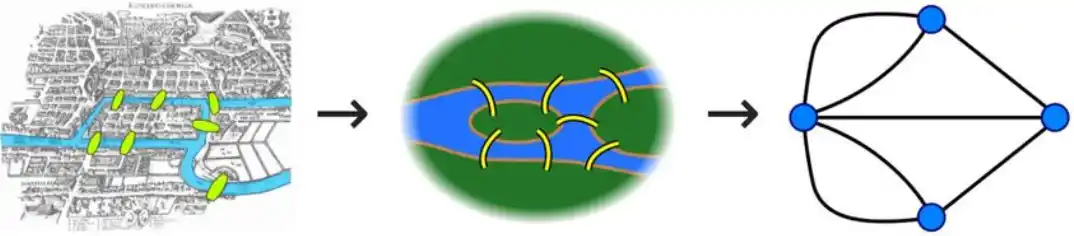
This seemingly simple step marked a monumental leap forward in the history of mathematics. It paved the way for a profound realization: countless problems, on the surface entirely unrelated, could ultimately be reduced to the relationship between points and lines. From this single insight, Graph Theory was born.
What does this have to do with you and me?
Today, graph theory serves as a foundational pillar of the modern world. It is the invisible engine driving everyday technology, answering questions such as:
- How navigation apps calculate the fastest routes
- How couriers optimize their delivery schedules
- How subway networks are designed for efficiency
- How social media platforms suggest new friends
- How circuits are intricately mapped on a computer chip
- How search engines map the relationships between websites
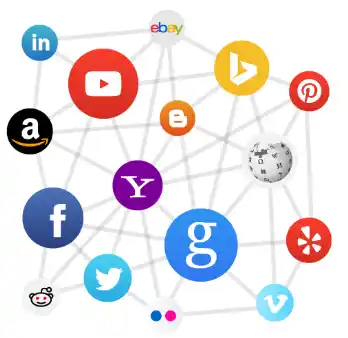
Google, GPS, the internet, and even artificial intelligence are, at their core, inextricably linked to graph theory. When you open a digital map, locations become vertices and roads become edges. When you scroll through social media, users are the vertices and their connections are the edges. And when a search engine indexes the web, every webpage is a vertex, linked together by the edges of hyperlinks.
And to think, it all began with a simple riddle: “How can one cross seven bridges?”
The Four Color Conjecture
While the Seven Bridges puzzle gave birth to graph theory, the Four Color Conjecture stands as one of its most celebrated and legendary enigmas.
Try coloring a map of the United States using as few colors as possible. The rule is straightforward: no two neighboring regions may share the same color.
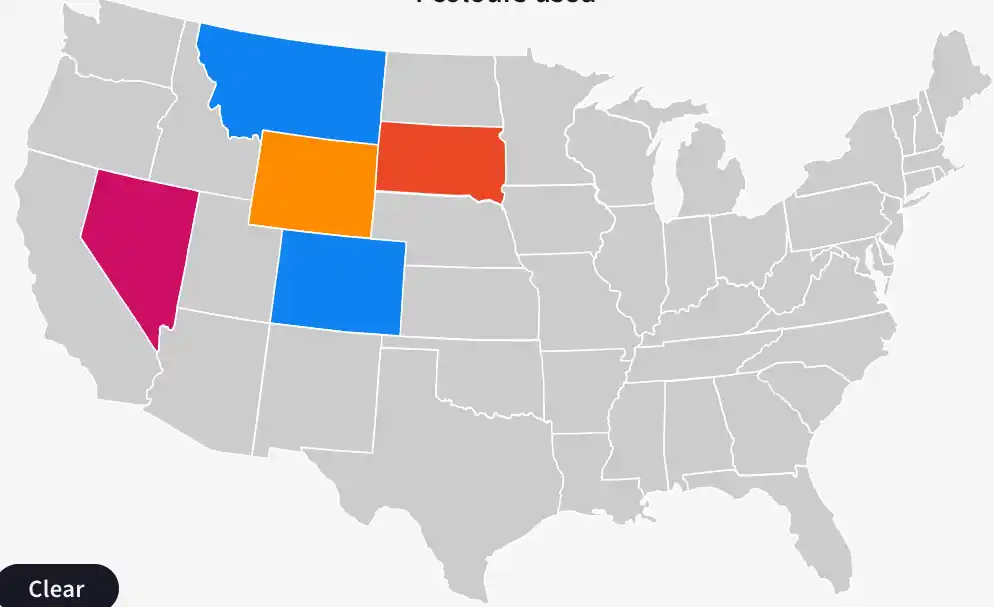
Here comes the question: no matter how intricate a map might be, what is the absolute minimum number of colors required to fill it?
For over a century, mathematicians wrestled with this very puzzle, only to arrive at a shockingly simple conclusion:
Four colors will always suffice.
This is the celebrated “Four-Color Conjecture.”
The allure of many mathematical problems lies in the thrill of calculation. The Seven Bridges of Königsberg, however, is a different beast entirely—it demands no computation at all, making it accessible to anyone.
And that captures the true magic of mathematics. It isn’t always about crunching numbers. Rather, its real power lies in uncovering the hidden structures beneath our complex world. Once you unveil that underlying framework, a seemingly impossible, even chaotic problem often snaps into perfect focus.
Further Reading