Comprehension is not a static concept; it is an evolving chain of perception.
In Chinese, the concept of understanding is wrapped in a single, deeply condensed expression. No lone word in the English language can fully capture its weight. When we say, “I understand you,” we are not merely uttering a phrase—we are weaving through layers of connection:
- I see the world as you see it (Perception)
- I trace the paths of your thought (Cognition)
- I grasp the meaning behind your words (Comprehension)
- I discern the canvas of your actions (Understanding)
- I feel the quiet echo of your emotions (Empathy)
- I honor the existence of your inner world (Recognition)
- I find myself in harmony with your soul (Resonance)
Thus, when someone laments, “You do not understand me,” they are not always mourning the same loss.
At times, it simply means they remain unseen. At other times, your logic may grasp their reason, yet your heart fails to inhabit their grief. And sometimes, the deepest wound is that their separate, sacred reality was never acknowledged in the first place.
True understanding is never a single destination; it is an intricate journey of human connection.
Perception
    ↓
Cognition
    ↓
Comprehension
    ↓
Understanding
    ↓
Empathy
    ↓
Recognition
    ↓
Resonance
Each progressive layer of insight relies entirely on the foundation of the last. You cannot grasp what you have never perceived; you cannot offer empathy to someone you fundamentally fail to understand; and true resonance remains forever out of reach when the other is denied their very agency as an equal being.
Perception: Do We Coexist in the Same Reality?
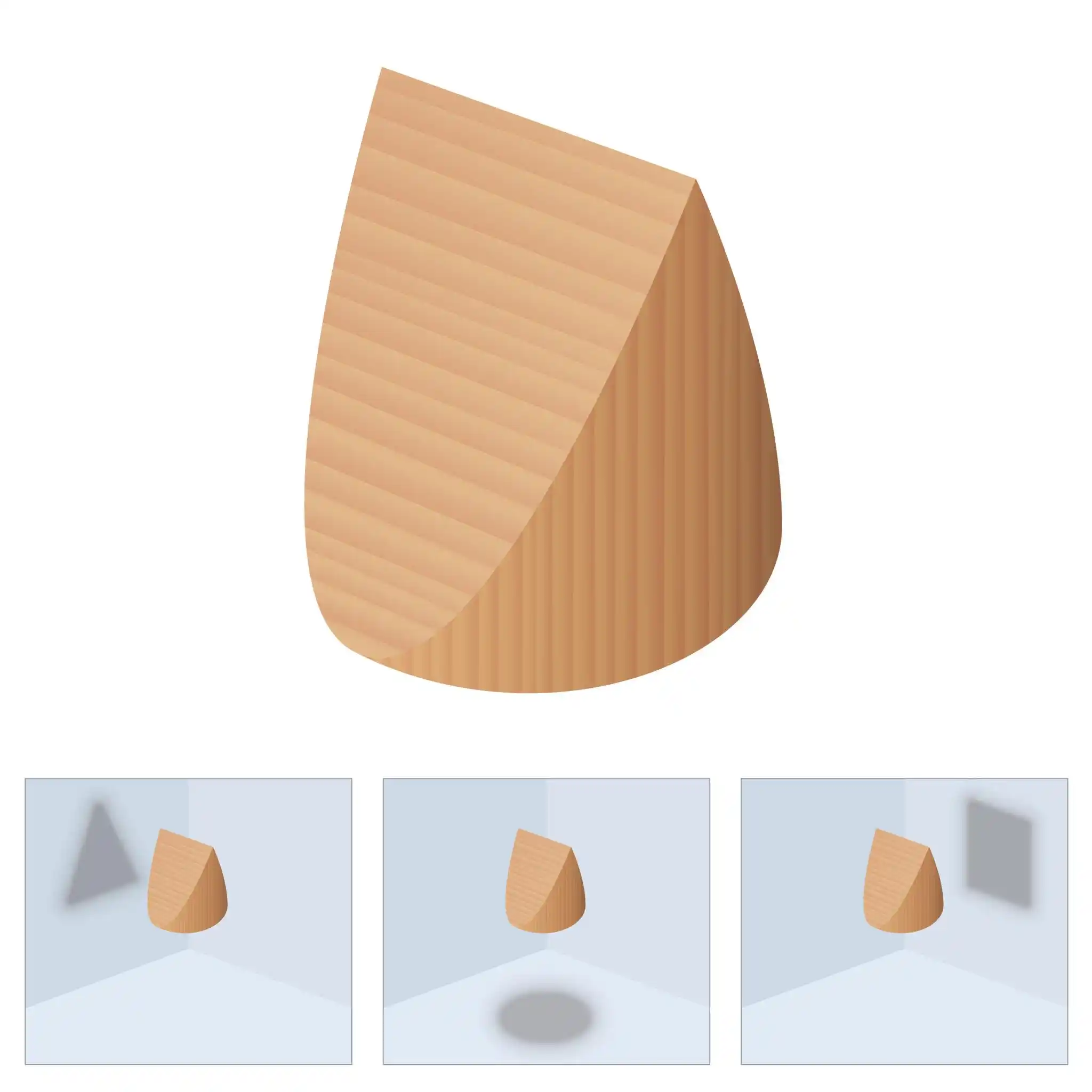
Perception forms the very bedrock of our cognitive architecture—the input layer through which existence flows.
It does not ask, “What do you think?” but rather, “What do you see?” Perception is, by its very nature:
- Inherently selective
- A filtered fragment of reality
- Predisposed to systemic bias
Though our nervous systems are incessantly flooded with an ocean of stimuli, the mind retains only a precious fraction. Attention sifts through the chaos, past experiences reshape our interpretations, and prior assumptions dictate what enters our awareness and what fades into oblivion.
We move through the world under the illusion that we are observing objective reality, blind to the fact that we are merely witnessing a version rendered in real-time by our own minds. Thus, countless conflicts fracture not during the exchange of ideas, but long before—born from the silent truth that we never shared the same horizon to begin with.
Cognition: The Architecture of Your World
If Perception provides the raw materials, Cognition is the architect of the world model. It governs the unspoken gravity of our inner landscape:
- The ripples of cause and effect
- The cataloging of concepts
- The mapping of the abstract
- The weaving of memory
- The mechanics of anticipation
From the exact same reality, entirely divergent worlds are born. Consider a single human action:
- One person views it through the prism of emotion.
- Another deciphers it by the cold calculus of economic constraint.
- A third judges it within the solemn geometry of a moral framework.
They look upon the identical horizon, yet the constellations they trace are not the same. At its core, Cognition is the art of crafting an internal architecture capable of both illuminating the present and forecasting the unseen. So many of our human fractures, seemingly born of conflicting opinions, are in truth a deeper dissonance: the quiet collision of entirely different ways of modeling reality.
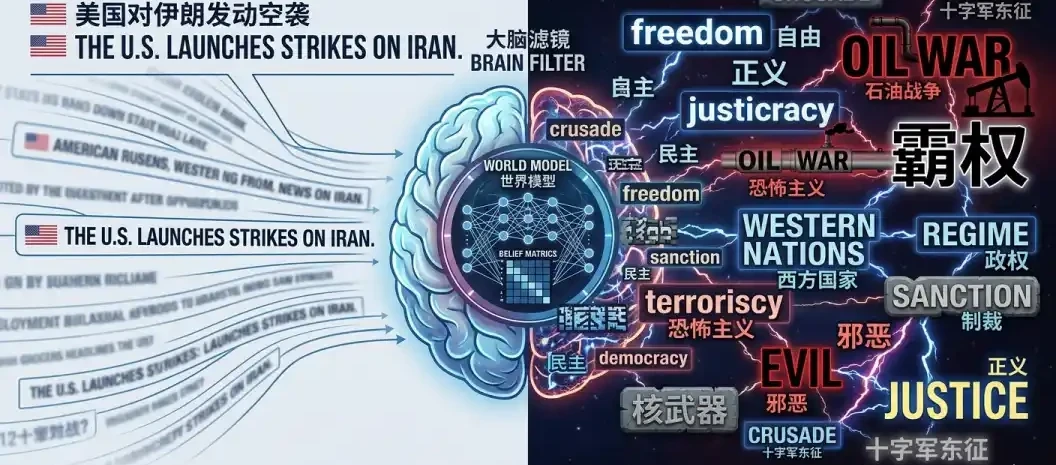
Comprehension: The Validity of Localized Interpretation
Comprehension aligns more closely with the act of grasping the spoken word—it probes whether an interpretation can truly hold its ground. For instance:
- Does the logic remain inherently self-consistent?
- Can it encompass the entirety of the current information?
- Is it free from glaring contradictions?
This state represents a form of localized verification. Much like a compiler, every fragment of interpretation must successfully “pass compilation” on its own terms.
When someone concludes a complex thought and you reply, “I see what you mean,” you are operating within the realm of Comprehension. You have grasped the architecture of the explanation itself, yet you do not necessarily embrace it, nor do you yet possess the complete worldview required to sustain it.
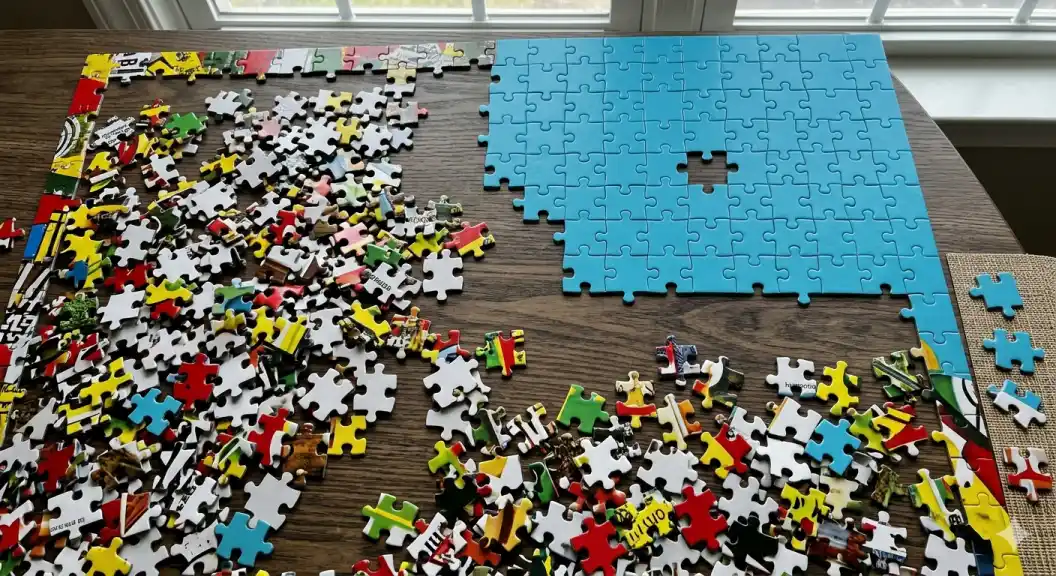
Understanding: Has the System Closed the Loop?
Understanding goes a step beyond comprehension. Where comprehension addresses why a particular event occurred, understanding resolves a more profound question: what kind of system continuously gives rise to such events?
It is not achieved when a single explanation holds true, but when multiple explanations converge to form an unassailable model. Understanding only dawns when a vast tapestry of phenomena can be illuminated by the selfsame framework. To put it another way: comprehension is the grasp of a solitary phenomenon; understanding is the possession of the generative matrix from which those phenomena spring.
The essence of understanding lies not in absolute correctness, but in flawless internal consistency. Only when you can foresee the future trajectories of a system do you truly cross the threshold into understanding. Yet, even then, it remains confined to the realm of the intellect. To understand a soul does not mean you can feel its weight.
Empathy: Inhabiting the Architecture of the Other’s Experience
To empathize is to step away from abstract modeling and cross the threshold into raw experience. It ceases to ask why another thinks the way they do, and begins to wonder what it truly feels like to be them.

Empathy, at its core, is the capacity for internal simulation. It is an attempt to reconstruct the sensory and emotional landscape of another within the theater of your own consciousness. This includes:
- The resonance of emotion
- The mapping of pain
- The mirroring of joy
- The projection of another’s hierarchy of values
Thus, empathy must never be mistaken for alignment. One can trace the anatomy of another’s suffering without endorsing their actions. One can feel the tremor of their fear without subscribing to their conclusions.
Conversely, you can fully dissect the mechanics of a person’s logic yet remain entirely exiled from their emotional world. Intellectual comprehension and emotional empathy are distant shores.
There is also sympathy—which is better understood as “feeling for someone.” It is an expression of care and goodwill, but it watches the storm from a safe distance, whereas empathy steps out into the rain.
Sympathy = I feel FOR you.
Empathy = I feel WITH you.
Recognition: Embracing the Other as a Sovereign Subject
Recognition is often the most quietly overlooked layer of human connection. In the philosophical landscape of Georg Wilhelm Friedrich Hegel, it signifies the profound moment one subject acknowledges another as an inherently independent being.
It does not demand correctness, alignment, or even empathy. It asks only one fundamental question:
Do you recognize that the other person dwells within a world entirely their own?
Many harbor the illusion that they truly understand others. In reality, they merely view the other as a flawed entity awaiting correction. We hear it in refrains like:
“I see why you think that way, but you shouldn’t feel that way.”

This is far from true recognition. Here, the individual is stripped of their autonomous consciousness, reduced instead to a problem to be solved. Genuine recognition speaks a different language:
“Even as I stand apart from your truth, I honor your sovereign right to navigate a reality different from my own.”
The deepest agony in human relationships rarely stems from being misunderstood. It arises, far more painfully, from the refusal to be acknowledged.
Resonance: The Alignment of Systems
Resonance is not a cognitive capacity, but a state of relational being. When two independent systems interact, they may manifest:
- Convergent value functions
- Parallel structures of attention
- Consonant frameworks of world-modeling
- Attuned frequencies of emotional response
It is in this alignment that resonance is born. Yet, resonance does not imply that two souls dissolve into one. It arises only in the wake of Recognition—meaningful only when both parties first acknowledge each other as distinct, sovereign entities. Without this, it is not resonance, but mere assimilation.
To borrow a metaphor from vectors: Recognition is the acknowledgement that two distinct vectors exist; Resonance is their gradual inclination toward a shared direction within a higher-dimensional space. It is the dynamic harmony of two independent systems, keeping their autonomy intact while moving as one.
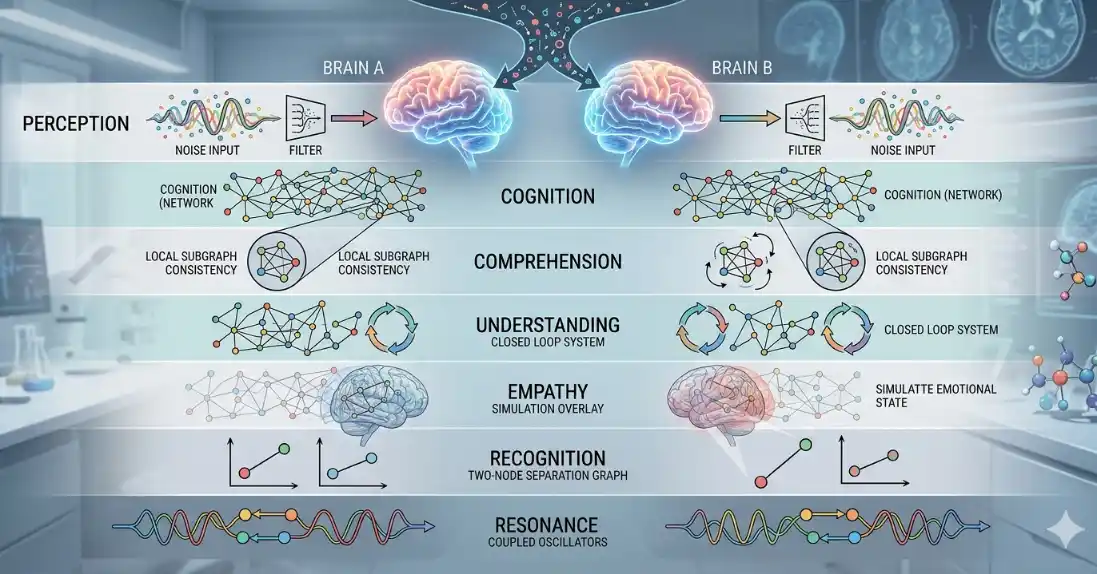
Understanding Is Not a Destination, But a Continuity
| Realm | Core Inquiry | Ontological Function | Manifestation of Dissonance |
|---|---|---|---|
| Perception | Do we witness the same horizon? | Sensory Ingress | Fractured realities; looking but not seeing |
| Cognition | How do you construct the world? | Architecture of Mind | Divergent world-models; disparate truths |
| Comprehension | Does this coherence hold? | Local Interpreter | Conflicting narratives; localized friction |
| Understanding | Does the loop find its closure? | Holistic Cosmos | Structural void; the circle cannot close |
| Empathy | Can you inhabit my interiority? | Experiential Simulator | Emotional estrangement; cold distance |
| Recognition | Do you honor my sovereignty? | Sovereign Validation | De-subjectification; treating the other as an echo |
| Resonance | Do our internal frequencies align? | Systemic Attunement | Silence between souls; no shared vibration |
Each realm harbors its own quiet question. Thus, when someone whispers, “You do not understand me,” they are rarely demanding your blind agreement. More often, they are yearning for something deeper:
- For you to witness the horizon they see;
- To grasp how they weave meaning into their world;
- To inhabit the texture of their feelings;
- To recognize that they possess a sacred world entirely their own.
We often deceive ourselves into believing we are debating mere opinions, unaware that we are drifting past one another across different realms of perception, cognition, and recognition.
Further Reading