Learning is essentially a process of restructuring.
True learning is inherently a painful endeavor. It is not the mere accumulation of information, but rather
a relentless cycle of dismantling old frameworks to forge new structures.

Often, the true dawn of a person’s awakening is not the triumphant acquisition of new knowledge, but the sudden, jarring realization that
the very scaffolding of their past understanding was entirely flawed.
This realization brings an exquisite agony. The cognitive system, by its deepest instinct, craves stability, predictability, and the preservation of energy—a design perfected by evolution. Survival diminishes if one must wake each day to question the integrity of their entire reality. Thus, as the years advance, the mind quietly retreats from the fluid, plastic realm of exploration, settling into the low-energy comfort of predictive patterns. It is why a child absorbs language like light, while an adult struggles to adapt, and the elderly become anchored in their ways. For most, life eventually narrows to a state where the core architecture of the mind is sealed, and only the superficial details are ever adjusted.
In this quiet calcification, “learning” ceases to be an exploration of the cosmos, degrading instead into the mere maintenance of a dying world.
The Scarcity is Not Intellect, But Cognitive Plasticity
High intelligence and elite credentials rarely guarantee a truly open mind. Often, they simply produce individuals who are exceptionally skilled at wielding existing frameworks, maintaining internal logical consistency, and deducing within the boundaries of a legacy system. They excel at weaponizing logic to defend preconceived positions.
Yet, the moment a new truth threatens their foundational architecture, they retreat into the same defensive posture as anyone else. The ultimate bottleneck has never been computational power. It is a question of existential courage:
Are you willing to let your model of the world be undone and remade?
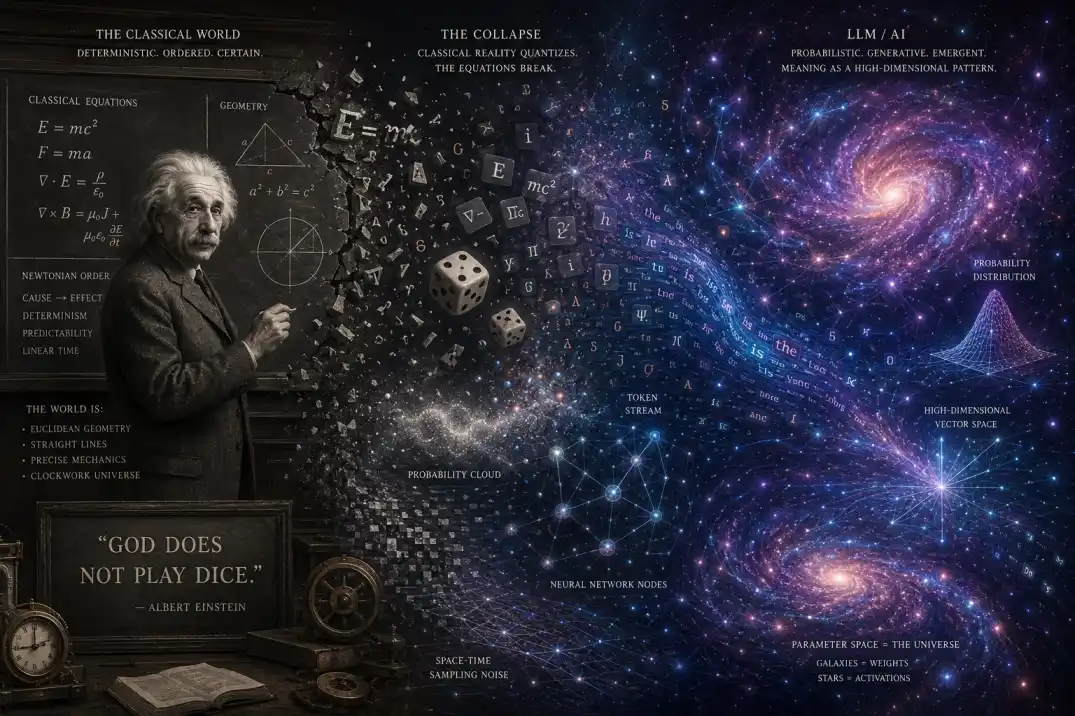
In his youth, Einstein shattered the illusions of absolute time and classical space, systematically dismantling the towering Newtonian edifice. Yet, in a twist of cosmic irony, the great revolutionary would spend his later years fiercely resisting the dawn of quantum mechanics.
This was never a mere technical dispute; it was a profound schism over the very fabric of reality. Einstein could not reconcile his soul with a universe built on the shifting sands of probability and fundamental indeterminacy. To him, the cosmos was an altar of elegance, continuity, and perfect predictability.
Ultimately, the iconoclast became the guardian of his own deep structures. He spent the twilight of his life attempting to mend the cracks in the classical fortress, steadfastly refusing to accept that at its most profound depths, the universe dances to the rhythm of pure randomness.
Therefore, the rarest human faculty is not intellect, but a quieter, more resilient strength:
- The grace to sustain a lifelong wonder
- The humility to accept that one might be mistaken
- The courage to live alongside uncertainty, and to hold one’s judgment in abeyance
- And ultimately, the profound willingness to let the world remain more beautifully intricate than our own minds can fathom
And this demands an immense reservoir of psychological fortitude. To update one’s cognition is to invite vulnerability; at times, it resembles a subtle, miniature “death of the self.”
- The narratives we once lived by dissolve.
- The absolute certainties of yesterday begin to waver.
- The once-solid scaffolding of meaning begins to fracture.
Thus, those who truly evolve do so by weathering seasons of self-doubt, inner dissolution, and enduring reconstruction. Growth is rarely a journey toward absolute certainty—in fact, it is often quite the opposite. It is the quiet courage:
To gaze upon an increasingly chaotic world, and yet choose, unfalteringly, to understand it.
The Awakening After the Shock
For most of us, a profound shattering of reality is the only catalyst that forces a true re-examination of the world. In the quiet rhythm of the ordinary, we rarely choose to dismantle and rebuild our core understanding of existence. Though our long-held models of the world may be deeply flawed, they offer sanctuary:
- A fragile sense of permanence
- The illusion of predictability
- A constructed identity to cling to
- An emotional anchor in the drift
- The effortless efficiency of habit
This, for the most part, is how we live—perpetually mending the frayed edges of old interpretations rather than casting them aside. We cling to these weathered frameworks until a seismic shift in reality forces our hand.
Such awakenings often arrive in the wake of profound upheaval:
- The shattering of intimacy — when a shared world abruptly fractures.
- The silence of bereavement — facing the void left by a loved one’s passing.
- The reckoning of grave illness — when the fragility of the flesh can no longer be ignored.
- The ruin of ambition — watching a life’s work collapse into dust.
- The sting of betrayal — when a foundational trust turns to ash.
- The tides of historical change — being swept up in the vast, unforgiving currents of societal transformation.
- The death of an ideal — when the illusions we built our worlds upon finally dissolve.
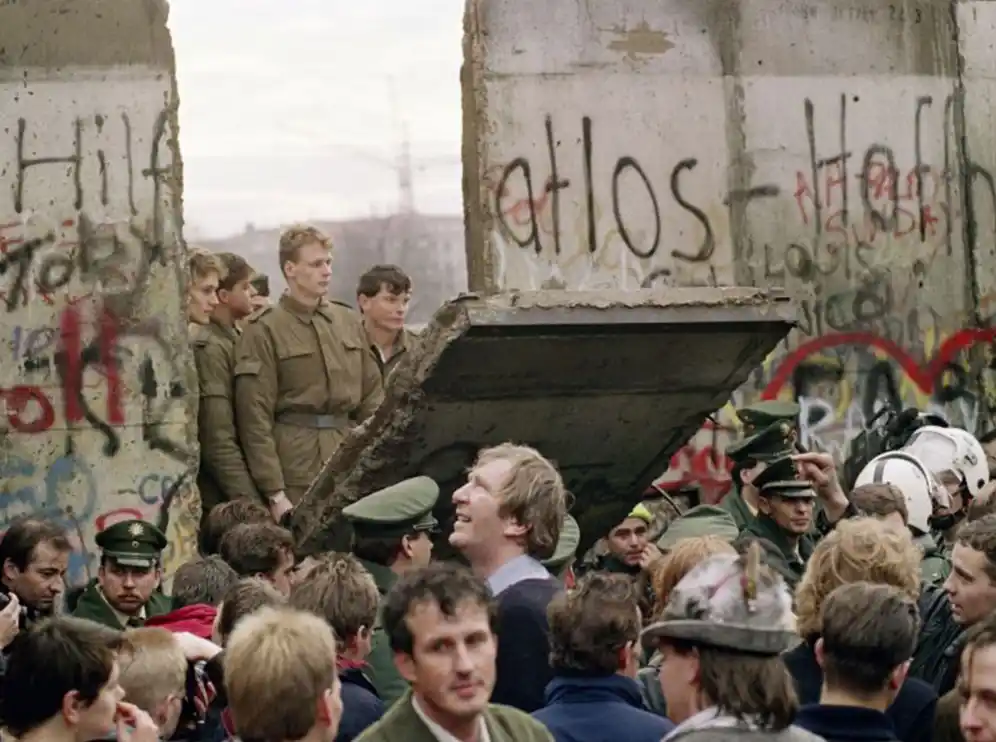
These profound disruptions resonate so deeply not merely due to the weight of suffering, but because reality itself suddenly breaks free from the confines of our old conceptual frameworks. It is precisely when our familiar logic shatters that we are forced into a true stillness—a deliberate pause to observe and reflect anew:
- What compelled us to anchor our faith in those past illusions?
- Why did we persistently turn a blind eye to the quiet warnings around us?
- How did we come to misread the intentions of others so completely?
- What chained us to the ceaseless repetition of the exact same behavioral loops?
For so long, it was never that the truth remained hidden from our sight. Rather,
the rigid architecture of our old mind had been silently filtering out the very fragments of reality we were simply unready to confront.
Until the impact swells to a threshold where suppression and filter fail. It is in this precise fracture that cognitive plasticity may briefly reawaken. Yet, suffering is no guarantee of growth. Confronted by the selfsame agonizing void, souls diverge onto entirely different trajectories: where one choicefully reconstructs their understanding, another retreats further behind an iron curtain of self-defense.
This sudden collapse of the internal architecture breeds a profound, destabilizing terror. In response, human nature splits into two distinct paths. The first is a quiet surrender: “Perhaps my understanding of the world was flawed,” prompting a return to patient observation, to learning, and to a re-attunement with the other. The second is a desperate entrenchment: “The world is broken, others are wrong, but I cannot be mistaken.” And with that, the old armor is only forged thicker, sealing the mind within its own echo.

Take the classic dichotomy of Jean Valjean and Javert in Les Misérables. Both were forged in the crucible of society’s lower depths, and both bore witness to the absolute darkest corners of human nature.
Valjean, broken by years of brutal imprisonment and the biting cruelty of the world, found himself radically undone by a bishop’s quiet mercy. Instead of hardening, he chose to transmute his profound suffering into a boundless, redeeming love for humanity, eventually ascending into a kind of secular sainthood.
Javert, also born into the underclass, chose a different armor: a lifelong, ascetic devotion to the illusion of “absolute order.” But when his rigid worldview finally collided with the blinding moral brilliance of Valjean, it shattered. Unable to reconcile his black-and-white dogmatism with the beautiful, agonizing complexity of human grace, he could no longer find a place for himself in the world—and surrendered his life to the dark currents of the Seine.
Another profound testament is Viktor Frankl. Though stripped of his family and subjected to unspeakable horrors within the confines of Nazi concentration camps, from the ashes of his suffering emerged his seminal masterpiece, Man’s Search for Meaning. He discovered that even in the nadir of human misery, there remains one unassailable sanctuary: the freedom to choose one’s own attitude. Elevating this realization into logotherapy, he threw a lifeline to countless souls who followed. Conversely, many who physically survived Auschwitz remained eternally captive to its shadows, consumed by survivor’s guilt and enduring trauma—forever unable to rebuild a life from the ruins of their past.
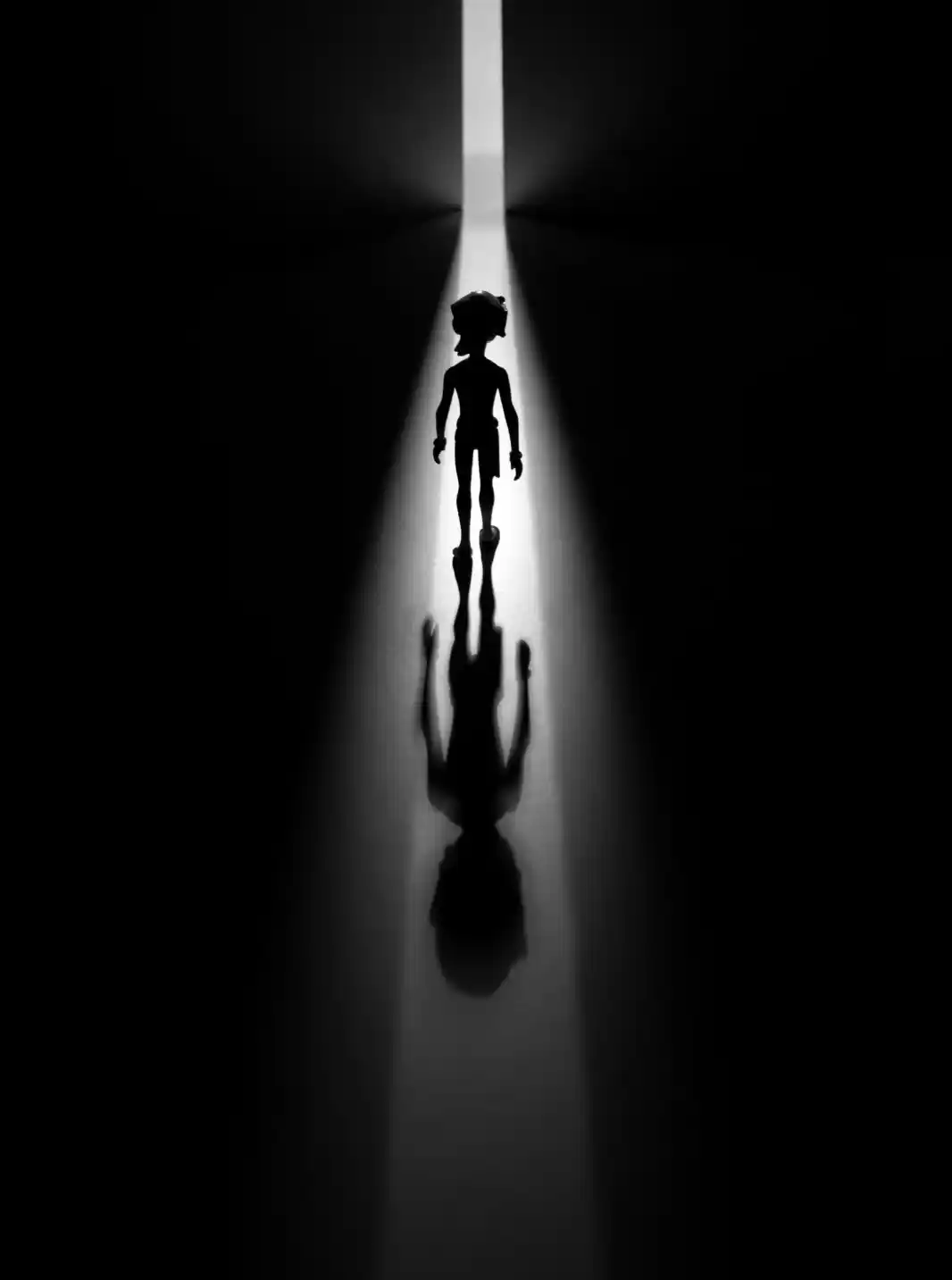
Those who step into the light usually possess the rare capacity for “cognitive reconstruction”—they do not deny their suffering, but they refuse to let it define the entirety of their existence. Conversely, those who drift into the shadows often wear their pain as an eternal badge of identity, weaponizing it as a justification to reject the world, or to tear it apart.
Consequently, the true crucible of cognitive restructuring lies in the fact that it is never merely about “acquiring new knowledge.” It demands that we allow a piece of our old self to die. So many of our outdated perceptions are deeply intertwined with our identity, our pride, and the very narrative of our lives.
Thus, inner growth rarely feels like a seamless upgrade; rather, it resembles a profound, agonizing process of self-dismantling and renunciation.
The Modern Habitat: Amplifying Recognition, Eclipsing Understanding
Cognitive erosion is far from a solitary affliction; it is actively bred by the architecture of our modern information ecosystem. The systems governing our daily discourse no longer cultivate depth; instead, they lavish rewards upon:
- The Swift Verdict: The instinct to judge instantly over the patience to perceive.
- The Entrenched Stance: The demand for rigid allegiance over the nuance of ambiguity.
- The Diluted Truth: The craving for reductive verdicts that strip reality of its complexity.
- The Tribal Echo: The comfort of collective conformity over the solitude of independent thought.
Instead of:
- The long, patient vigil of observation
- The lonely sanctuary of independent thought
- The grace of withholding judgment
- Embracing the tangled beauty of complexity
- Dwelling peacefully within twilight and blurred horizons
For instance,
- Short videos school the soul in fleeting sparks and instant echoes
- Social media commands us to choose a side, forbidding us to ponder
- Algorithms forge an endless echo, locking the mind in its own reflection
- Bleeding headlines displace the quiet rigor of deep inquiry
- The economy of clicks casts out all who dare to remain uncertain

Hence, we have grown accustomed to categorizing before comprehending, to taking a stand before taking a thought. Yet, true understanding is an inherently slow endeavor. It demands prolonged observation; it requires perpetual recalibration; it asks that we grant ourselves the grace to exist within the space of “not knowing.” In this day and age, such a capacity has become the rarest of virtues.
Thus, the truest hardship has never been the pursuit of knowledge itself. Rather, it is the slow, quiet erosion of the human spirit—the gradual loss of:
- The audacity to question.
- The patience to observe.
- The capacity to hold complexity.
- The courage to dismantle the old self.
Eventually, the world ceases to be a tangible reality rich with mystery and nuance, fading instead into a sterile taxonomy of familiar labels. Yet, those who truly never stop learning are not the ones who amass a treasury of absolute conclusions; they are the souls who stand amid the collapse of old explanations and refuse to avert their eyes.
They allow themselves the grace of not knowing. They permit the world to be infinitely more intricate than imagined. And they accept that who they once were was only ever a fragment.
True learning is rarely the acquisition of answers. Rather, it is:
The resolve to discard old certainty time and again, yet refuse to surrender the longing to truly comprehend the world; The courage to look upon existence anew after it has been renamed, embracing both the flawed universe and the imperfect self.