Truth is but a fragment of reality, bound by the scale through which we choose to look.
Why does the human mind ache to instantly declare who is righteous and who is flawed?
Why does the presence of contradiction breed such inherent unease within us?
And why do children, by their very nature, long for a world of absolute saints?
True cognitive growth is not the mere accumulation of knowledge; it is the mind’s awakening capacity to endure complexity and embrace contradiction.
We are inherently wired to crave certainty, consistency, and the comfort of a black-and-white world—a primal defense mechanism designed to minimize mental exertion. It is precisely why early childhood, herd mentalities, ideological propaganda, bite-sized digital media, and emotionally charged political rhetoric all rely so heavily on oversimplified binaries. They offer a fortress of absolute certainty.
Yet, the cosmos does not operate in binaries. To step into higher cognition is to awaken to a landscape of profound ambivalence, where one discovers that:
- Benevolence and selfishness often inhabit the very same soul.
- Institutions can fiercely protect human life while quietly crushing the human spirit.
- Love and the desire for control are frequently woven from the same thread.
- Freedom, by its very nature, carries an undercurrent of existential pain.
- Truth is rarely absolute; it is a matter of scale, valid only within its own horizon.
- The bitterest conflicts seldom offer the luxury of a single, flawless resolution.
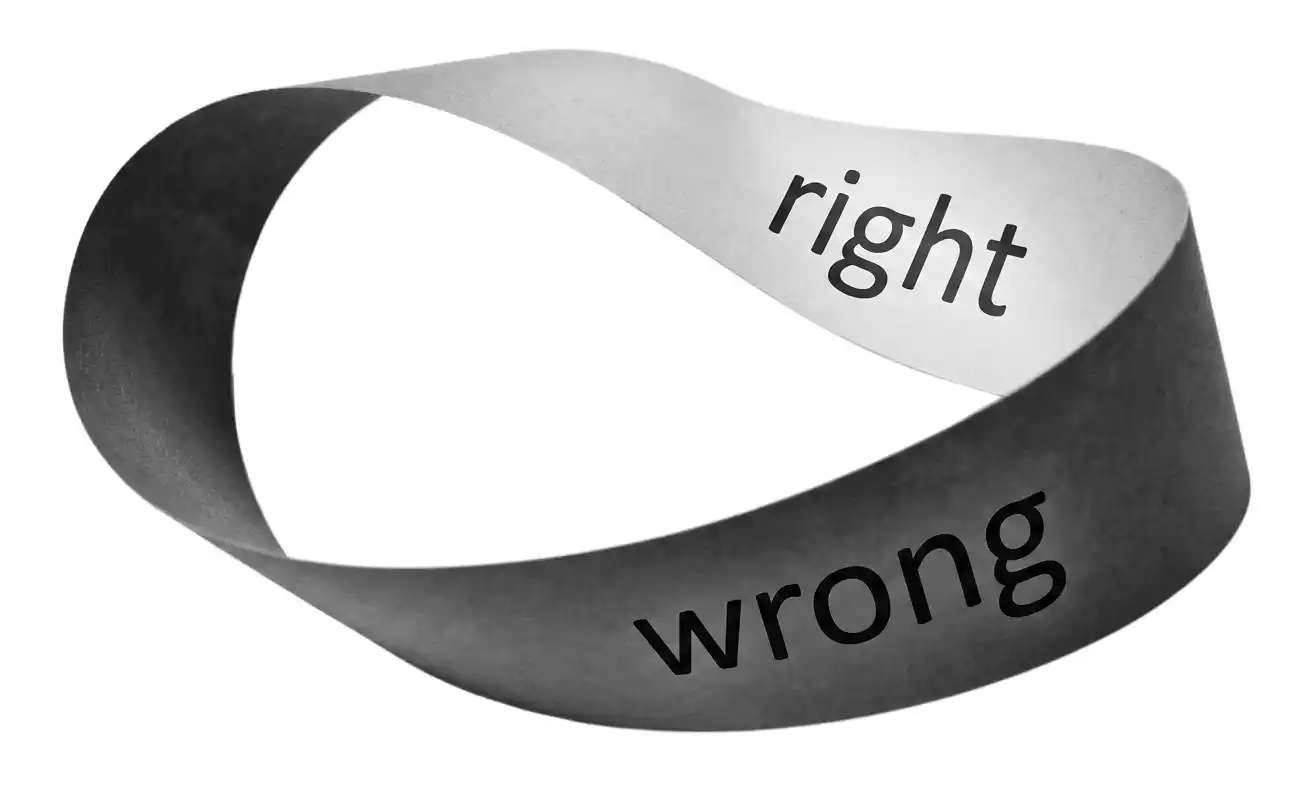
A vital shift in the dawn of intellectual maturity is this: we no longer rush to eradicate contradictions, but instead begin to understand the very soil from which they coexist.
To hold such a perspective is an immense, heavy burden for the mind. By nature, our intellect deeply recoils from cognitive dissonance—the friction of opposing truths. When two conflicting realities present themselves at once, our primal instinct is to find an escape:
- Erase: Blotting out one truth to salvage the other.
- Confine: Forcing fluid complexities into rigid, artificial categories.
- Align: Retreating into the comfort of a chosen side.
- Reduce: Stripping away the nuance for a comforting, simplified illusion.
Consider a father who harbors a profound love for his child, yet continuously inflicts harm upon them. To the casual observer, this is an irreconcilable paradox: either the harm disproves the love, or the love absolves the harm. The human mind inherently resists the uncomfortable truth that affection and affliction can coexist within the same breath.
Yet, reality compels us to acknowledge that love does not inherently grant understanding. In the innocent eyes of childhood, parents are often cast as infallible deities. True maturity, however, arrives with the quiet realization that our parents—while loving us genuinely—are themselves prisoners of their own fears, their generation, their unhealed traumas, and the boundaries of their own minds.
This realization does not serve as an automatic absolution for the pain they caused. Rather, it dismantles the flat, binary world of absolute good and evil, revealing instead the multi-dimensional, poignant architecture of human nature.
The Symphony of Contradictions in Science
To the common mind, science stands as the absolute, singular truth. Yet, the deep-seated “contradictions” we perceive within it are often nothing more than the whispers of different scales.
In the slow, familiar rhythms of our daily existence, Newtonian mechanics reigns supreme, an unspoken truth; yet, as we venture toward the blinding speed of light, this certainty begins to fray. Newton was not “wrong,” nor did relativity utterly erase his legacy. Instead, relativity expanded the horizon, just as quantum mechanics would later arrive to shatter our stubborn intuitions.
Perhaps truth itself is bound by the very lens through which we view it—shifting, evolving, scale-dependent. It is a restless reality that many find unsettling, bound as we are by the timeless, human yearning:
That truth, by its very nature, must be singular and absolute.
In much the same way, a father may excel within the material dimension of parenthood, yet long inflict silent wounds upon his child within the realm of emotional resonance. Every framework has its horizon; when we reach for absolute truth, we are not capturing the eternal, but merely weaving a finer, higher-resolution approximation of reality.
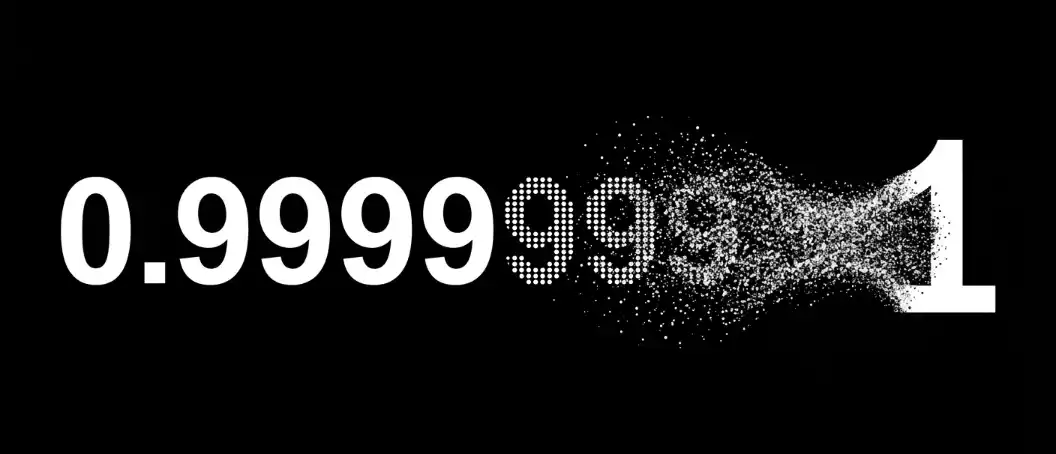
A mature perception of science does not look back to proclaim, “All that came before was an error, and now, at last, we hold the absolute truth.” Rather, it is the profound realization that
every model we construct is but a varied approximation, a flickering shadow reaching toward reality.
The Harmony of Contradiction in Human Relations
Mature interpersonal understanding follows the same truth. A person may be:
- Brilliant in intellect, yet stagnant in emotional maturity
- Captivating in charisma, yet hollow within the soul
- Tender to the passing world, yet paralyzed by true intimacy
- Wise to the ages of history, yet a stranger to their own heart
Indeed, one’s greatest strength often bleeds from the very same source as their deepest wound. The acutely sensitive soul may effortlessly commune with art, yet remain fragile to existence. A relentless drive for control often springs from a long-endured sanctuary of insecurity. And those of unyielding rationality are sometimes merely holding the line against a torrent of unexpressed emotion.
People harbor a restless urge to distill the vast complexity of a human soul into a mere caricature—a flat, binary token of praise or scorn:
- The Heartbreaker
- The Gold Digger
- The Unlettered
- The Partisan
- The Authority
- The Terrorist
- The Outcast
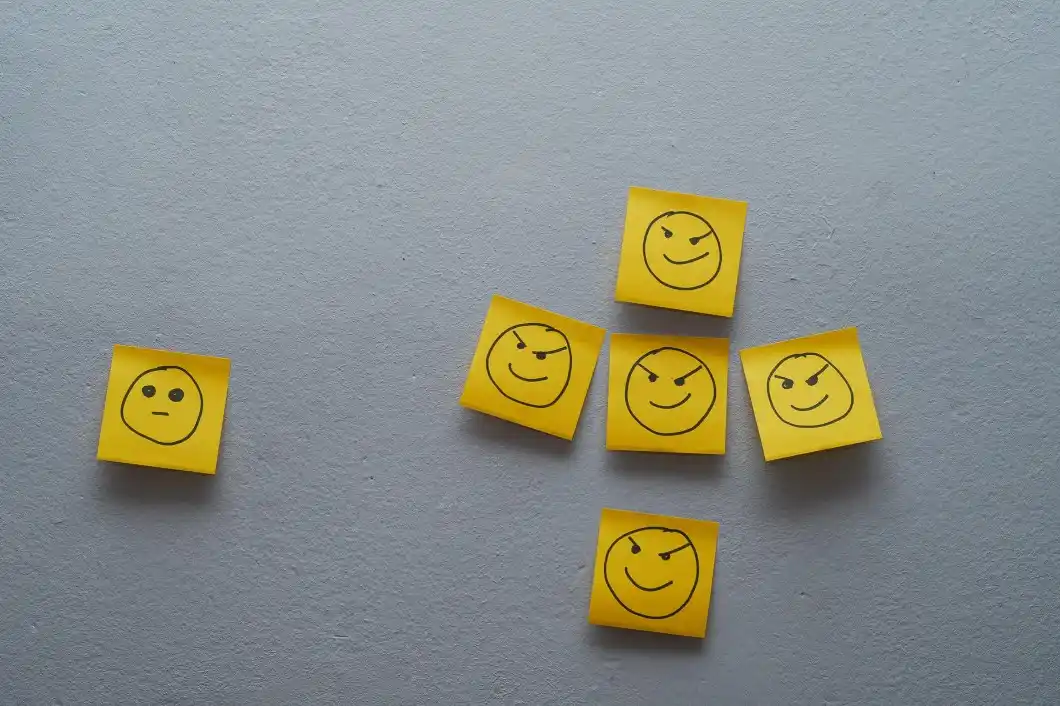
Such labels offer a fleeting sense of comprehension and comfort, yet they lull the mind into abandoning the pursuit of intricate, contradictory truths.
To Understand Is to Forfeit Simple Answers
A contradiction does not inevitably render one side entirely false; more often, it is merely a clash of local realities viewed through different scales. Cognitive growth rarely brings ease; instead, it leaves one in deeper silence. For many problems harbor no flawless resolution, and many conflicts defy absolute eradication. Many are not “malicious” by nature, but are simply trapped within the architecture of their own existence. In the grand tapestry of human tragedy, there is seldom a single, easy target upon which to cast the blame.
This state of being, in truth, divests us of a certain “moral ease.” No longer can the world be reduced to a simple canvas of:
- Justice versus Malice
- Right versus Wrong
- Wisdom versus Folly
Instead, it reveals itself as a complex tapestry woven from countless constraints, historical trajectories, emotional architectures, probabilities, traumas, vested interests, and the inherent limitations of human cognition.
As a child, we grasp at the rudimentary binaries of “correct” and “incorrect.” Yet, upon reaching maturity, one cannot help but look back and smile at how beautifully naive it all was.
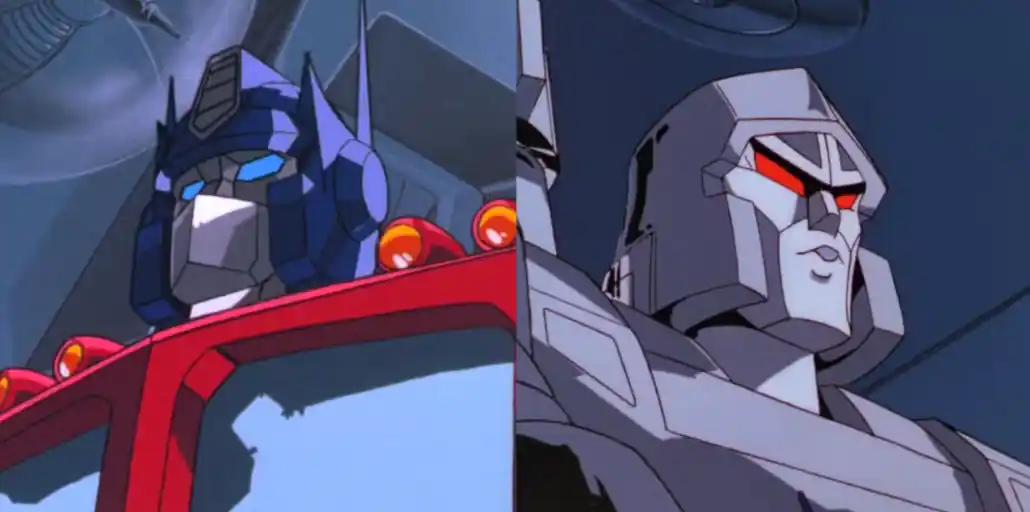
A mature mind gradually awakens to a singular state of grace:
To hold firm in judgment, yet cease to reduce the world to simplicity.
This is neither relativism nor a passive capitulation where “everything goes.” To comprehend the cause is never to absolve the consequence. To trace the genesis of a perpetrator is not to condone the violence; to understand the roots of extremism is not to embrace the zealotry. Maturity does not dissolve judgment; rather, it safeguards judgment while refusing to compress the vastness of reality into binary variables. The world yields none of its true mysteries to a mere label. Yet, humanity continuously mistakes its own fractured, finite models for absolute reality, bleeding and colliding within the hollows of this collective delusion.
A profound portion of human suffering stems from this very tragic alchemy: elevating a local, fleeting truth to the altar of the absolute. When two models clash, the instinctual response is not to recognize a traveler with a different map, but to demonize an adversary as fundamentally flawed.
Every war of ideology, stripped to its essence, is but a tragic collision between finite shadows mistaken for the sun.
Further Reading