Unveiling the Architecture of the Microcosm
Imagine taking a stone and cleaving it endlessly:
Stone → Grain of Sand → Molecule → Atom
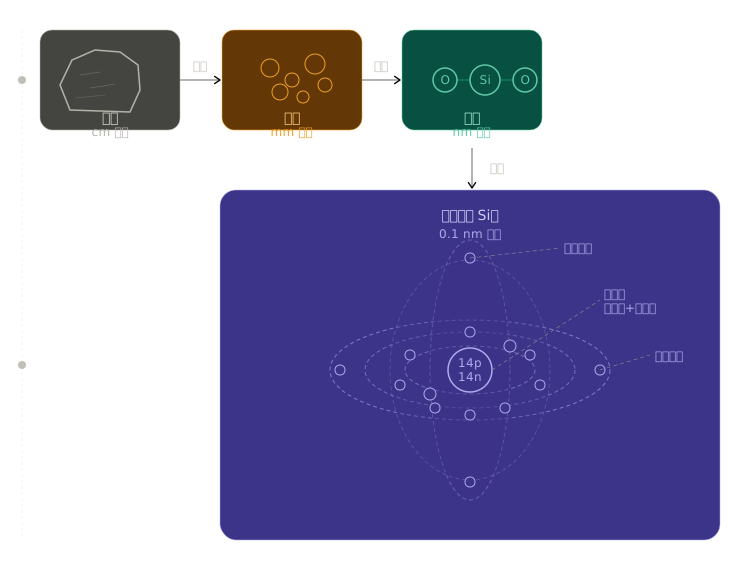
At the end of this division lies the genesis of all chemistry: What, truly, is an atom? Textbooks routinely proffer a familiar diagram—a nucleus orbited by a cloud of electrons—accompanied by a roster of components to memorize:
- Proton
- Neutron
- Electron
What follows is usually an avalanche of definitions, rules, and nomenclature.
Yet, if an atom is indeed a construct woven from these fundamental particles, could we not assemble one ourselves, piece by piece, like building blocks?
Orchestrating an Atom from Scratch
I often find myself returning to an elegant interactive simulation crafted by the University of Colorado.
Before you sit three reservoirs of colored spheres, each representing a particle: protons, neutrons, and electrons. You are invited to drag and drop them into the void of the atomic cradle.
Let us introduce a single proton. The screen immediately responds:
Hydrogen
As long as that solitary proton remains, the entity is, irrevocably, Hydrogen.
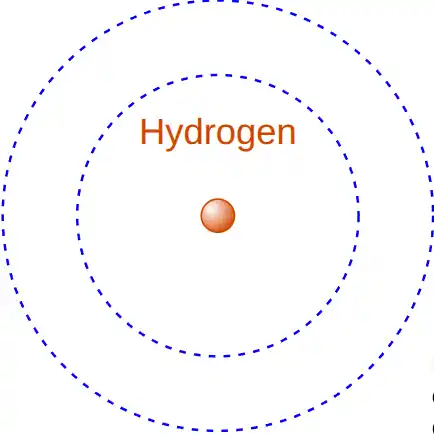
Add another proton, and it transmutes into Helium. Advance to six, and it becomes Carbon; eight, and it breathes as Oxygen. In this progression, a fundamental truth reveals itself:
The primal identity of an element is dictated solely by its proton count.
Every enclosure within the Periodic Table is, at its heart, a manifestation of this atomic cadence.
The Quiet Ministry of Neutrons
Now, let us hold the proton count constant and introduce a neutron to our Hydrogen atom. The name remains unaltered. We add another; the name still holds.
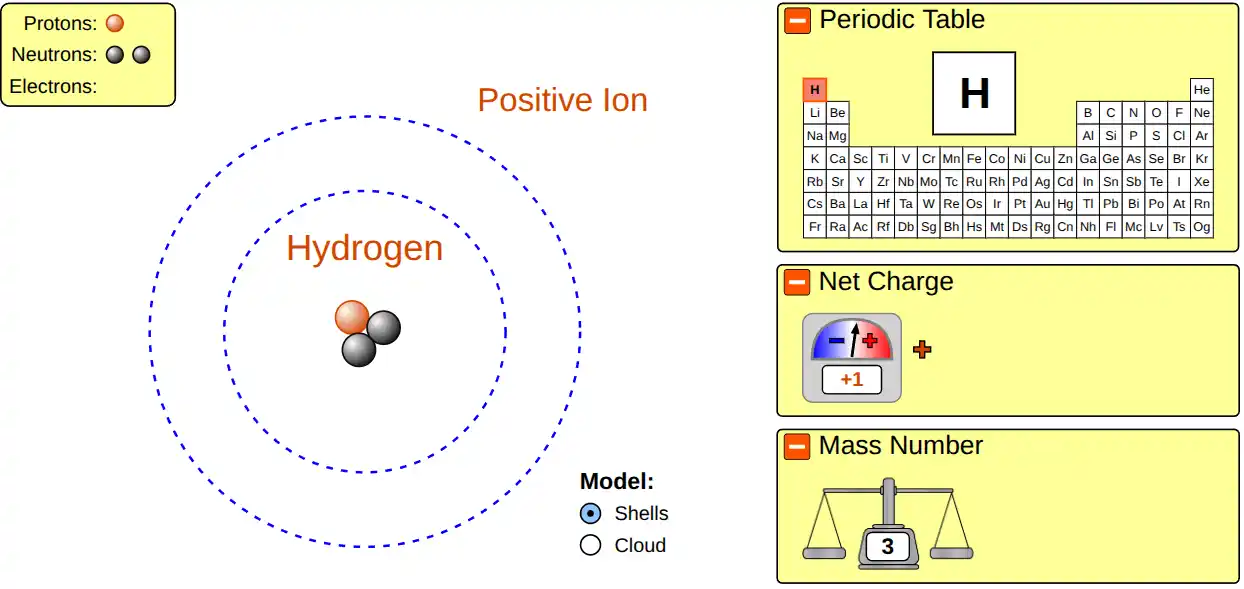
By unfurling the “Mass Number” panel on the right, you will observe the atom growing heavier, yet its elemental soul remains untouched. This is the crucible of isotopes—nuclides that share an identical proton count and thus belong to the same elemental family, yet diverge in mass due to their varying neutron counts. Thus:
Neutrons dictate the “edition” of an element, not its fundamental identity.
It is much like a human being, whose weight fluctuates between youth and maturity, yet whose essential identity remains unchanged.
The Dance of Electrons
Finally, we turn our gaze to the electrons. When protons and electrons exist in perfect symmetry, the atom rests in electrical neutrality. A surplus of electrons renders it negative; a scarcity leaves it positive.
Yet, no matter how we manipulate this electronic cloud, the elemental name endures. Oxygen remains Oxygen; Carbon remains Carbon. The proton remains the steadfast anchor of identity.
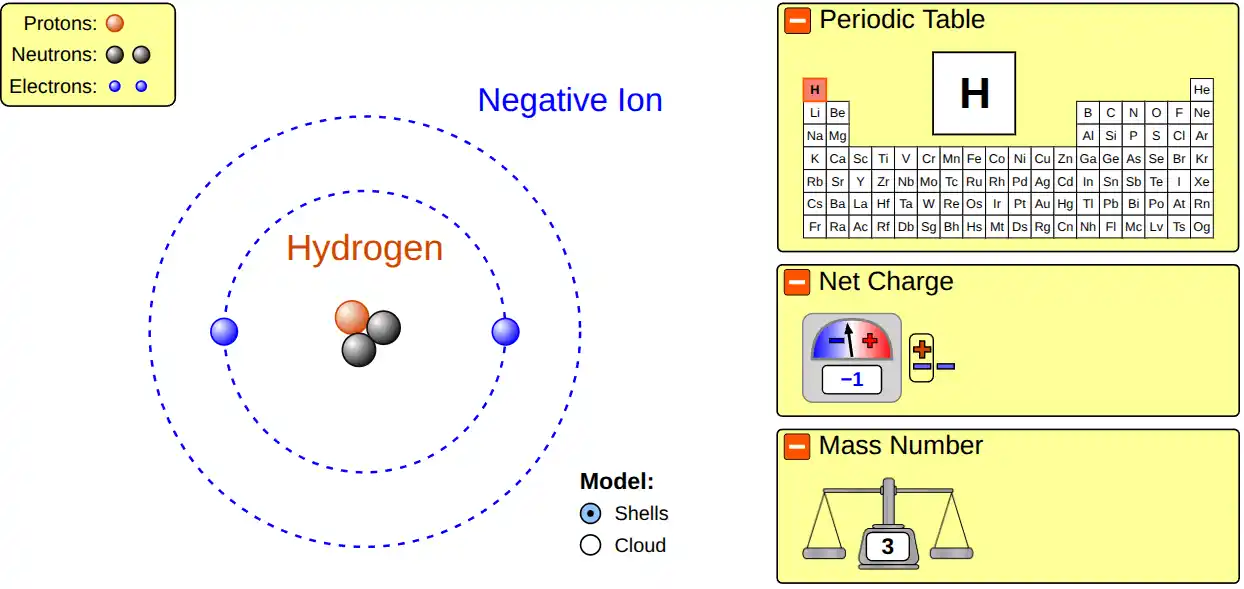
The electron’s domain is that of charge and affinity—it governs how an atom interfaces and dances with its peers in the theater of chemical reactions.
The Sovereignty of the Proton
If we perceive the atom as an architectural monument:
| Part | Architectural Persona | Consequence of Alteration |
|---|---|---|
| Proton | The Core Framework / Foundation | A transmutation of species (the birth of a new element via nuclear reaction) |
| Neutron | Structural Reinforcement / Infill | A shift in variance (weight alters, yet the essence remains via nuclear reaction) |
| Electron | Facade Adornment / Transient Tenants | A change in valence (the creation of ions or compounds via chemical reaction) |
The true sovereignty lies within the first tier. Alter the electrons, and the monument stands. Alter the neutrons, and the monument holds. But alter the protons, and the entire architecture is instantly reborn into something else entirely.
Six protons fashion Carbon. Seven manifest Nitrogen. Eight give rise to Oxygen. A divergence of a single proton is the chasm between entirely different worlds of matter.
The Grand Simplicity of the Atom
Stripped of scholastic density, the governing laws of the atom possess a poetic simplicity:
- Protons define what the element is.
- Neutrons determine which version it manifests as.
- Electrons dictate its harmonic charge.
The entirety of the Periodic Table, the vast tapestry of chemical reactions, and the very fabric of our bodies and the cosmos are spun from the combinations of these three fundamental threads. In a sense, chemistry is a grand game of cosmic blocks played at the frontier of the invisible.
Further Reading